
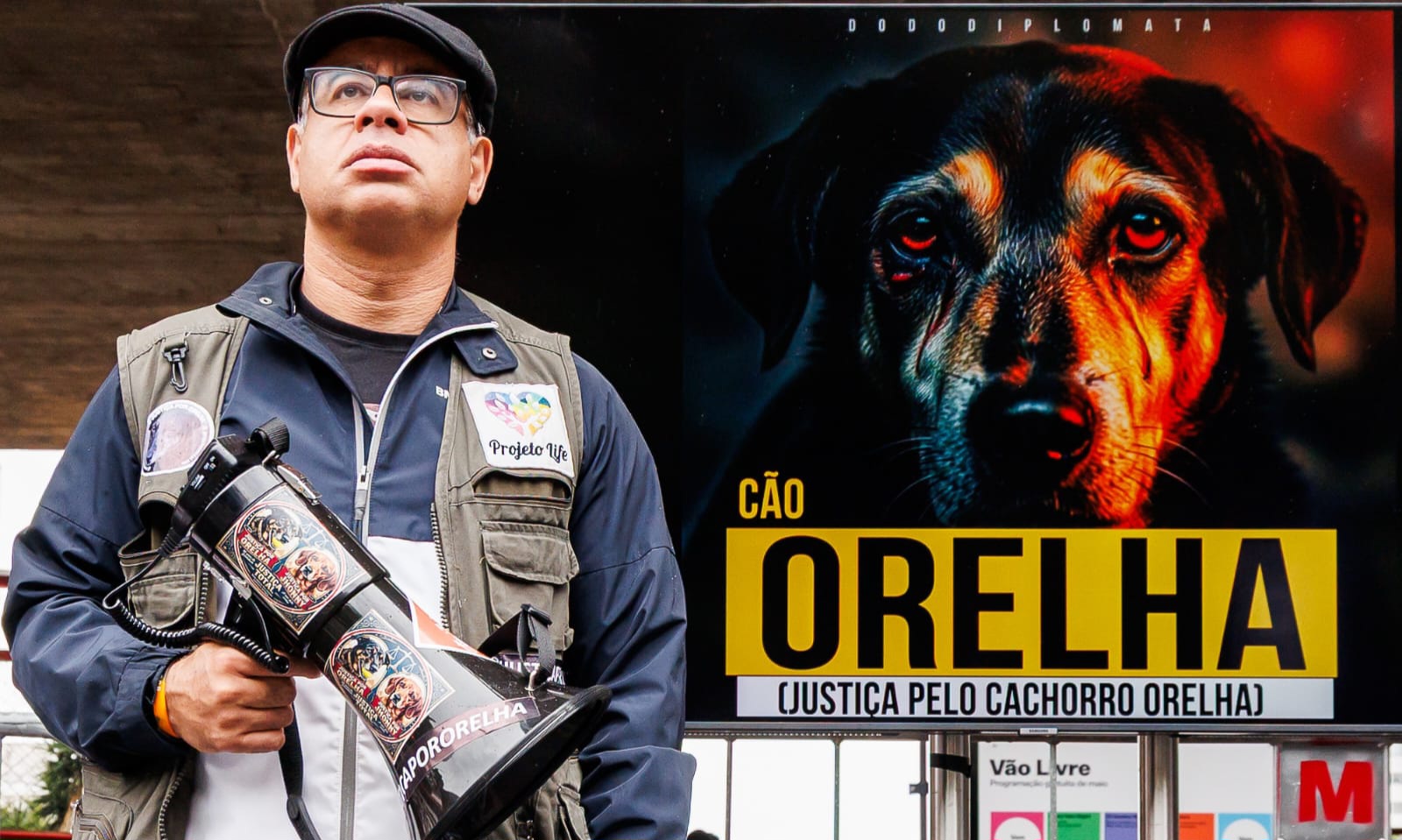
As São Paulo prepares to host a major animal welfare rally on July 26, initiatives taking place in different cities across Brazil are showing that protecting animals also depends on practical action, public awareness, and the collective efforts of rescuers, volunteers, organizations, and local communities.
The upcoming demonstration, scheduled for 10:00 a.m. at the open plaza in front of the São Paulo Museum of Art (MASP) on Paulista Avenue, will bring together animal rescuers, non-profit organizations, volunteers, and supporters to advocate for stronger animal cruelty laws, increased enforcement, expanded public policies focused on animal welfare, and greater public engagement in protecting animals.
Organized by businessman, judoka, and animal advocate Fernando Silva in partnership with influencer Kabelo Crespo, with the support of animal rescuer Priscila de Muno, the event will also serve as a networking opportunity for individuals and organizations dedicated to animal welfare, encouraging the exchange of experiences, new partnerships, and the strengthening of Brazil’s animal protection network.
In addition to the advocacy activities, attendees will enjoy a live performance by the rock band Cúpula, which will play international rock classics in a moment of celebration and community. The event will also feature prize giveaways and a donation drive collecting pet food, wet food pouches, veterinary medications, and pet supplies to be distributed to non-profit organizations and independent animal rescuers.
The rally highlights that animal protection extends far beyond public demonstrations. Every day, rescuers, volunteers, and organizations work to rescue abandoned animals, provide veterinary care, promote educational campaigns, encourage responsible adoption, and carry out social initiatives that directly improve the lives of thousands of vulnerable dogs and cats.
A recent example of this commitment took place last Saturday (July 11) in the city of Jandaia do Sul, in the state of Paraná. During a lecture on animal welfare presented by Fernando Silva, ten dog houses were donated for the city’s community dogs, providing shelter, comfort, and dignity for animals living on the streets and exposed to changing weather conditions.
The dog houses were donated to the non-profit organization Anjos de 4 Patas, led by Rose Daldoso, which is widely recognized for its work rescuing, treating, and protecting vulnerable animals. The initiative will help improve living conditions for community dogs in Jandaia do Sul, a municipality that continues to face challenges in expanding public animal welfare policies.
The donation ceremony took place at Fight Club gym under the coordination of instructor Lucas Wiatek and his wife, Ana Lachimia. One of the dog houses will remain at the gym to provide shelter for community dogs living in the surrounding area. The initiative brought together volunteers and supporters, demonstrating how collaboration between civil society, businesses, non-profit organizations, and independent rescuers can generate meaningful results for animals.
According to the organizers, initiatives like this demonstrate that effective animal protection depends on a combination of education, public awareness, and practical action. Donations, educational talks, fundraising campaigns, charity events, and community projects must go hand in hand with stronger legislation, consistent enforcement, and greater government commitment to animal welfare.
Organizers expect the July 26 gathering in São Paulo to attract participants from several Brazilian cities, strengthening the national animal welfare movement, expanding cooperation among rescuers, organizations, and supporters, and inspiring new initiatives across the country.
The event will also pay tribute to Orelha, a dog whose story has become a symbol of the fight against animal cruelty in Brazil, reinforcing the importance of turning public concern into concrete action, more effective public policies, and a lasting culture of compassion, responsibility, and respect for all animals.
